
Qdrant vs Milvus, self-hosted
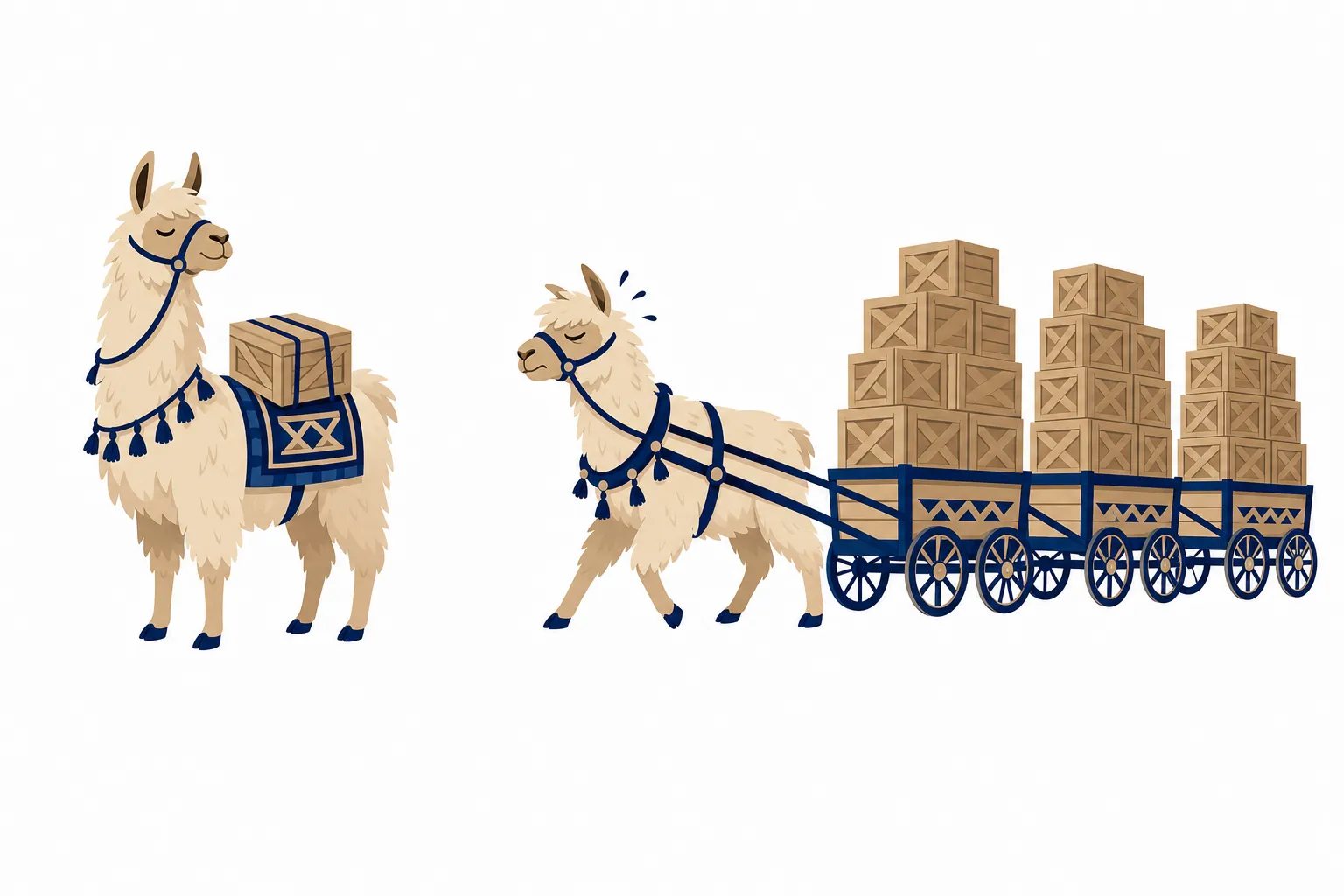
Qdrant is often the simpler place to start for self-hosting. Milvus offers deployment options for teams whose scale and operations needs justify a more distributed system. The right choice depends on the workload you need to run.
Updated July 11, 2026
The two, in one paragraph each

A Rust vector database with documented single-node and distributed deployment. A strong starting point when you want a smaller operational footprint.

A vector database with Lite, standalone, and distributed deployment options. Consider it when your deployment needs call for its broader distributed architecture.
Side by side
| Qdrant | Milvus | |
|---|---|---|
| Deployment | Documentation covers single-node and distributed deployment | Documentation covers Lite, standalone, and distributed deployment |
| Resource planning | Measure memory use with your vectors and index settings | Measure memory use with your vectors and index settings |
| Filtered search | Supports filtering; validate it against your workload | Supports filtering; validate it against your workload |
| Hybrid / BM25 | Documents dense, sparse, and multivector fusion | Review current Milvus retrieval documentation |
| Scale | Choose deployment based on your data and operations requirements | Choose deployment based on your data and operations requirements |
| GPU story | Review current release notes for hardware-related changes | Review current release notes for hardware-related changes |
| License | Apache 2.0 | Apache 2.0 |
What changed in 2025–2026
Qdrant's release notes are worth reviewing when planning an upgrade or evaluating index-building and memory-management options. Benchmark changes against your own collection before relying on them in production.
Milvus release notes document ongoing changes to deployment, storage, and indexing. Review the current documentation for the exact components needed by the deployment mode you choose.
The operational reality
Milvus is a distributed system, so plan for the operational work that comes with its selected deployment mode: monitoring, storage, upgrades, and recovery procedures. Make sure the team running it can support those parts.
Qdrant also needs operational planning, particularly for memory use, backups, restores, and distributed deployments. Its simpler starting shape can make it easier to operate, but validate the failure and recovery paths you need.
When Milvus is the right call
Choose Milvus when you need its deployment options, want to separate ingestion and query workloads, or already have the operational capability for a distributed system. Otherwise, start with the simplest deployment that meets your retrieval and recovery requirements.
Questions people actually ask
Which one is actually faster?
Neither is universally faster. Query latency depends on vector dimensions, filters, index settings, hardware, and concurrency. Benchmark representative data and queries before choosing.
Can I start on one and migrate later?
Yes. Qdrant documents a migration path from Milvus. Test a migration with representative collections, payloads, and application queries before moving production traffic.
Is pgvector enough instead of either?
It can be, especially when Postgres already fits your application. Evaluate filtering, index behavior, operational needs, and representative query performance before adding a dedicated vector database.
Are both really open source?
Both cores are Apache 2.0 with no usage restrictions. Both companies also sell managed clouds and keep some conveniences (managed backups, some enterprise auth) on the paid side, but self-hosting the full database requires nothing proprietary from either.
Sources
Both projects are rows in the Awesome Open Source AI registry, and both anchor the vector database table on the self-hosted RAG guide, which covers the rest of the stack they usually sit inside. For memory sizing and the wider field, including pgvector and the embedded options, see the self-hosted vector database guide.
