
Top 10 Open Source AI Observability Tools (2026)
This set covers open-source observability platforms, instrumentation libraries, and evaluation frameworks. Choose based on whether you need a tracing server, an API proxy gateway, a telemetry capture layer, or a CI evaluation framework; validate license terms, trace redaction, and deployment demands before production use.

Selection method
Candidates are evaluated by license clarity, OpenTelemetry support, deployment architecture, and clear functional boundaries between production tracing and offline evaluation.
The 10 open-source observability platforms, instrumentation libraries, and evaluation frameworks at a glance
| Candidate | Type | Category | Deployment | License | License note | Focus |
|---|---|---|---|---|---|---|
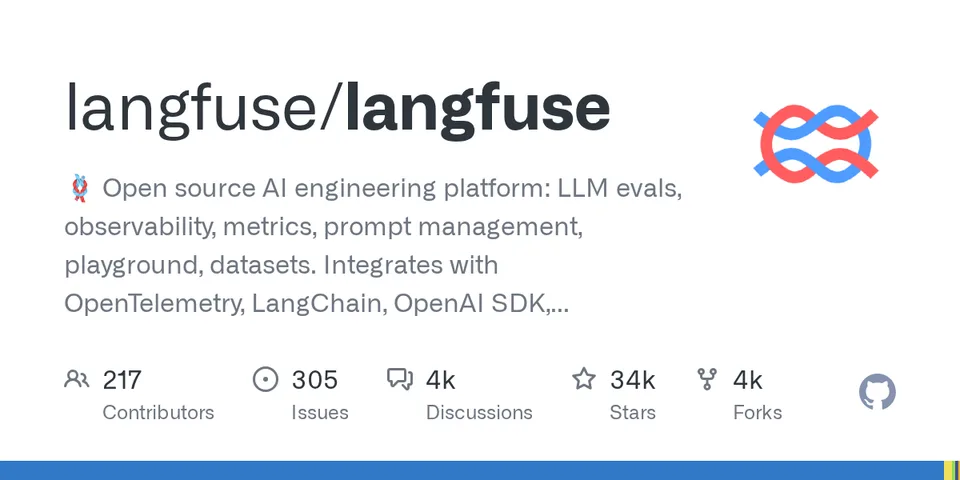
| #1 Langfuse Langfuse | Full platform | Monitoring, Evaluation & Observability | Self-hosted server · optional hosted service | MIT core platform | Permissive MIT core platform | Full-stack LLM tracing, prompt management, evaluations, and datasets with native OpenTelemetry support. |
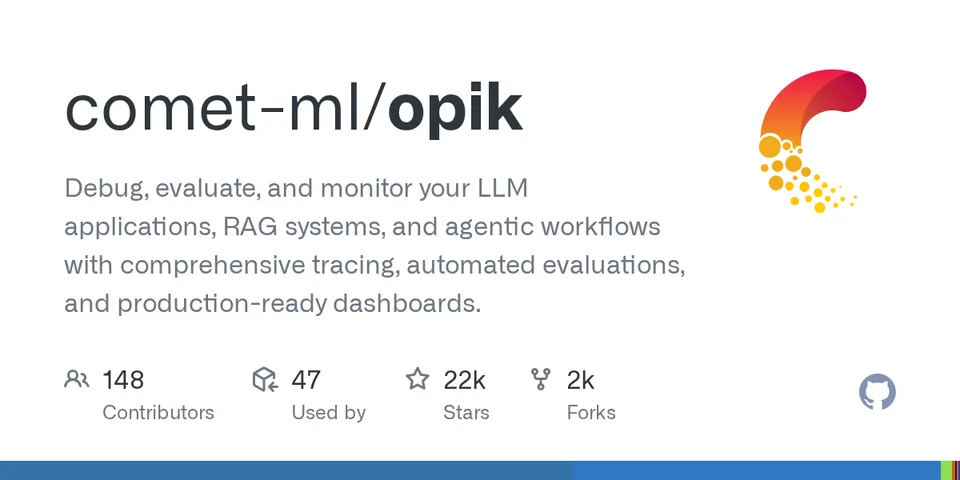
| #2 Opik Comet | Full platform | Monitoring, Evaluation & Observability | Self-hosted server · optional hosted service | Apache-2.0 | Permissive Apache-2.0 platform | Apache-2.0 platform for high-volume LLM traces, prompt management, online evaluators, and PyTest CI testing. |
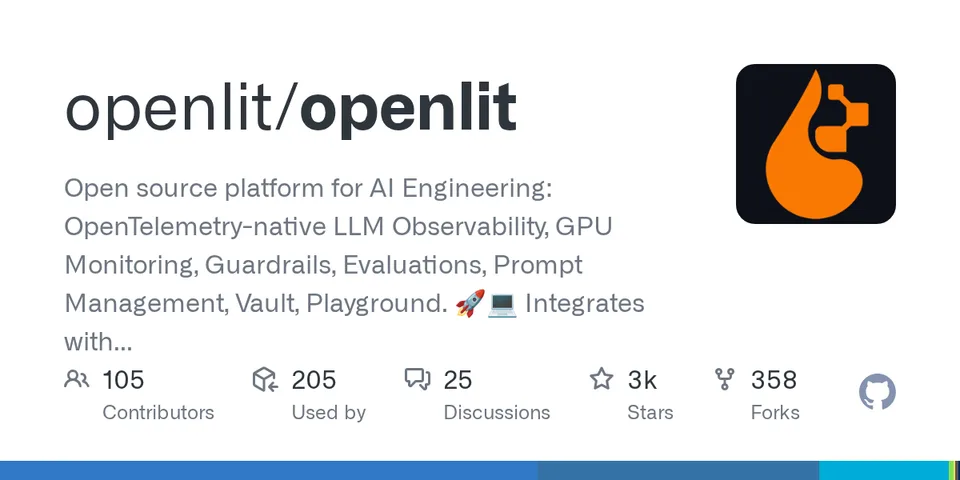
| #3 OpenLIT OpenLIT Community | Full platform / Auto-instrumentation | Monitoring, Evaluation & Observability | Self-hosted server | Apache-2.0 | Permissive Apache-2.0 OTel-native | OpenTelemetry-native auto-instrumentation and metrics for 50+ integrations across LLMs, vector databases, GPUs, and agents. |
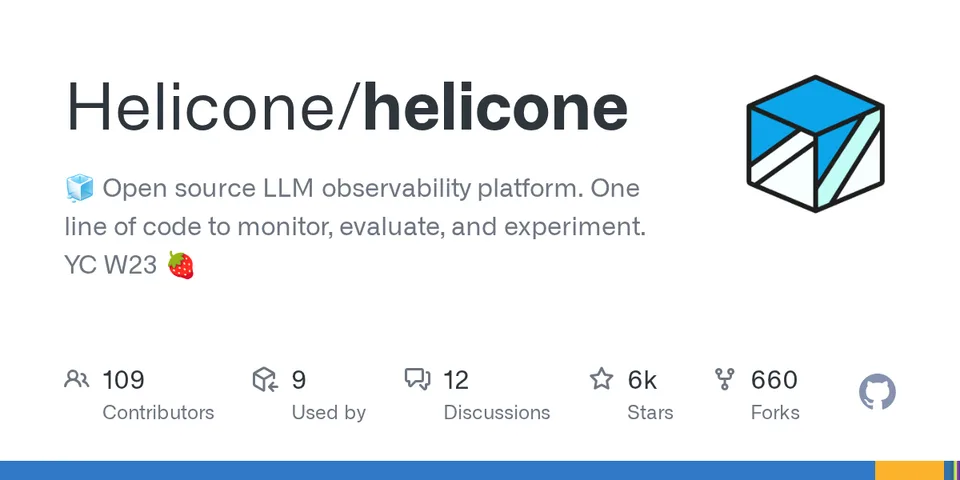
| #4 Helicone Helicone | Request gateway & logging | Monitoring, Evaluation & Observability | Self-hosted server · optional hosted service | Apache-2.0 | Permissive Apache-2.0 gateway & proxy | Proxy gateway and request logging for LLM cost/latency tracking, caching, rate limiting, and prompt versioning. |
| #5 MLflow Linux Foundation / Databricks / Community | Full platform / MLOps integration | Experiment Tracking & Versioning | Self-hosted server · optional hosted service | Apache-2.0 | Permissive Apache-2.0 MLOps platform | GenAI tracing, prompt registry, evaluation runners, and experiment tracking integrated into a unified self-hosted server. |
| #6 OpenLLMetry Traceloop | Telemetry instrumentation library | Monitoring, Evaluation & Observability | Instrumentation layer | Apache-2.0 | Permissive Apache-2.0 library (needs backend) | OpenTelemetry instrumentation library for LLMs, frameworks, and vector databases, exporting to a compatible OTel backend. |
| #7 Promptfoo Promptfoo | Local CLI/library | Guardrails & Safety Tools | Local CLI/library · optional commercial hosted/on-prem services | MIT | MIT Community · optional commercial hosted/on-prem services | Local CLI and library for declarative prompt testing, matrix model evaluations, and adversarial security scanning. |
| #8 DeepEval Confident AI | Pytest evaluation framework | Evaluation Frameworks | Local library · optional hosted service | Apache-2.0 | Permissive Apache-2.0 library (optional cloud) | Pytest-style LLM evaluation framework with quality metrics, synthetic data generation, and component-level tracing. |
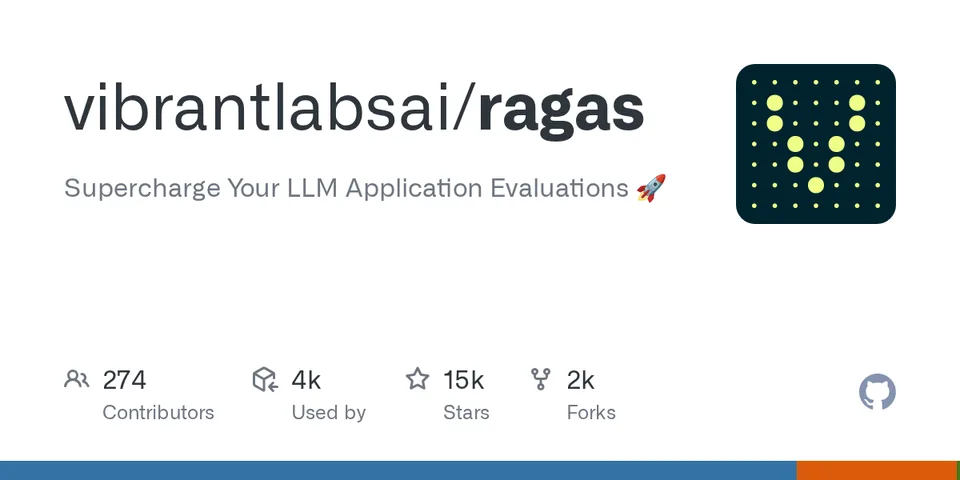
| #9 RAGAs VibrantLabs / Community | RAG evaluation library | Evaluation Frameworks | Local library | Apache-2.0 | Permissive Apache-2.0 library | Specialized evaluation library for measuring retrieval-augmented generation (RAG) quality, precision, and faithfulness. |
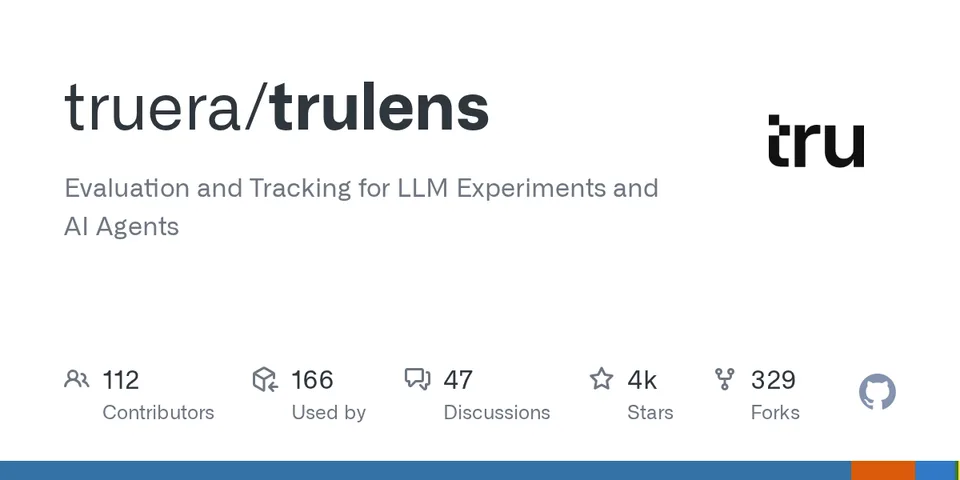
| #10 TruLens TruLens Community | Evaluation & experiment tracking library | Evaluation Frameworks | Local library | MIT | Permissive MIT evaluation library | MIT evaluation library for inspecting LLM application quality and comparing experiment results. |
Detailed candidate reviews
These open-source observability platforms, instrumentation libraries, and evaluation frameworks are ordered by editorial rank based on task fit, deployment, and license boundaries; each card includes its use case, category, type, and deployment classification.
Langfuse
Opik
OpenLIT
Helicone
MLflow
OpenLLMetry
Promptfoo
DeepEval
RAGAs
TruLens
Operational checklist before production deployment
Verify these five operational dimensions regardless of which AI observability tool you select:
Decision guide
| Requirement | Recommendation | Why |
|---|---|---|
| End-to-end tracing, prompt versioning, and continuous evals in one self-hosted platform | Langfuse (MIT core platform) | Core platform is MIT-licensed, accepts OTLP input natively, and combines trace history with prompt registries and evaluation queues. |
| Apache-2.0 self-hosted platform with online evaluation rules and prompt optimization | Opik (Apache-2.0) | Apache-2.0 platform with Docker Compose and Helm deployment paths, online rules for production traces, and PyTest hooks. |
| Zero-code OpenTelemetry auto-instrumentation for LLMs, vector databases, and GPU metrics | OpenLIT (Apache-2.0) | OpenTelemetry-native under Apache-2.0, providing single-line auto-instrumentation across 50+ integrations and OTLP export. |
| Proxy-level request logging, API caching, rate limiting, and cost monitoring | Helicone (Apache-2.0) | Apache-2.0 gateway that proxies model traffic to deliver immediate request logging, cost tracking, and response caching with minimal code changes. |
| Unified MLOps platform covering GenAI tracing, prompt management, and classical model experiments | MLflow (Apache-2.0) | Established Apache-2.0 foundation with native GenAI tracing and prompt registries, allowing teams to standardise on a single self-hosted tracking server. |
| Vendor-neutral OpenTelemetry instrumentation layer across LLM frameworks and vector databases | OpenLLMetry (Apache-2.0) | Apache-2.0 telemetry capture library that hooks into existing OTel collectors and compatible backends. |
| Declarative prompt testing, model matrix comparisons, and automated red-teaming in CI/CD | Promptfoo (MIT) | MIT Community CLI/library designed for local assertion testing and security scanning before code is merged or deployed, with optional commercial hosted/on-prem services. |
| Pytest-native unit testing and metric evaluation for RAG and agent pipelines | DeepEval (Apache-2.0) | Apache-2.0 testing framework with LLM quality metrics and direct integration into Python test suites. |
| Specialized RAG quality evaluation (faithfulness, context recall/precision) and test dataset generation | RAGAs (Apache-2.0) | Lightweight Apache-2.0 Python evaluation library with RAG metrics that integrate into offline benchmark scripts. |
| Local LLM evaluation and experiment tracking without adopting another production telemetry server | TruLens (MIT) | MIT evaluation library focused on feedback functions and experiment records, with a clear boundary from production trace ingestion. |
Questions people ask
What is the difference between a full AI observability platform and an evaluation library?
Server platforms such as Langfuse, Opik, and MLflow provide ingestion servers, tracing UIs, prompt registries, and production monitoring. Local libraries such as DeepEval, RAGAs, and TruLens run in applications or CI/CD to evaluate model outputs, execute test assertions, track experiment results, or score RAG metrics without hosting a production telemetry backend. Promptfoo's MIT Community edition is local/CI-first, while its optional commercial hosted/on-prem services have separate boundaries; OpenLLMetry is an instrumentation layer that needs a compatible backend.
Why is OpenTelemetry (OTel) important for LLM observability?
OpenTelemetry provides data standards (OTLP) and semantic conventions for LLM calls, spans, and metrics. It reduces dependence on proprietary ingestion, but portability depends on conventions, exporters, and backend support.
How does self-hosting AI observability protect trace data privacy?
LLM traces often contain sensitive user prompts, internal document context, and proprietary model outputs. Self-hosting can keep observability data inside your infrastructure when exporters, telemetry, storage, and external evaluation/model calls are configured accordingly; verify each configured data path.
Can evaluation-only tools like Promptfoo, DeepEval, RAGAs, and TruLens be used alongside tracing platforms?
Yes. The recommended production pattern is to use Promptfoo, DeepEval, RAGAs, or TruLens during CI/CD to catch regressions before deployment, while streaming production traces to a platform like Langfuse or Opik for real-time monitoring, user feedback scoring, and sampling.
Sources
- Langfuse GitHub repository
- Langfuse Observability documentation
- Langfuse Self-hosting documentation
- Opik GitHub repository
- Opik documentation
- OpenLIT GitHub repository
- OpenLIT quickstart documentation
- Helicone GitHub repository
- Helicone self-hosting documentation
- Helicone evaluation documentation
- MLflow GitHub repository
- MLflow GenAI documentation
- MLflow Evaluation documentation
- OpenLLMetry GitHub repository
- OpenLLMetry documentation
- Promptfoo GitHub repository
- Promptfoo documentation
- Promptfoo tracing documentation
- DeepEval GitHub repository
- DeepEval documentation
- DeepEval getting started documentation
- RAGAs GitHub repository
- RAGAs documentation
- TruLens GitHub repository
- TruLens documentation
Related internal pages
Related self-hosted guides and model deployment comparisons:
 Official Weekly Digest
 Stay Updated on Open-Source AI
Get net-new open-source models, agent frameworks, inference engines, and tools delivered directly to your inbox every week.
This guide audited the Awesome Open Source AI registry and mapped each active candidate to its registry profile query and official primary sources at the August 23, 2026 audit.
